

Section 01Why a Cluster View Matters More Than a State View
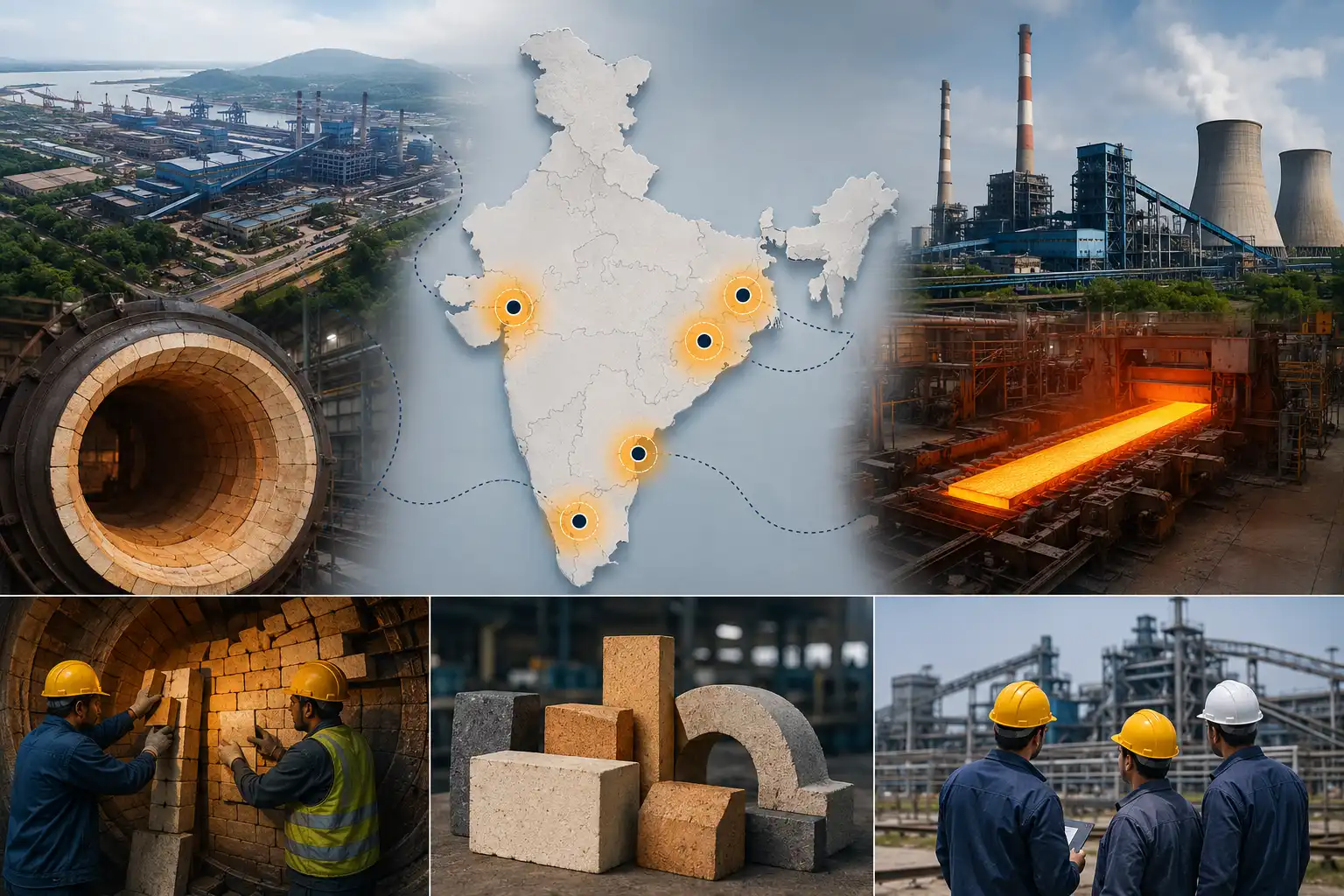
Most refractory planning still happens plant-by-plant, or at best state-by-state. That misses the real constraint: refractory demand in India is geographically clustered, not evenly spread. A handful of industrial corridors — built around iron ore, coal, and port access — concentrate the country's steel, sponge iron, power, and chemical capacity into tight geographic zones. When the June–July shutdown window opens, every major plant inside that corridor goes into maintenance within the same 6–8 week period.
For a maintenance head, that has one direct consequence: contractor and material availability inside your cluster becomes the binding constraint, not budget or scope. If you're in Jharsuguda and you wait until May to book your refractory contractor, you are competing with every other CPP and steel unit in that same 40 km radius for the same skilled labour pool and the same high-alumina brick inventory.
This guide breaks down the six highest-potential clusters for refractory maintenance demand this shutdown season — what's there, what kind of refractory work each cluster typically needs, and how early you should be booking.
Kalinganagar – Angul – Jharsuguda – Paradip

This is India's most refractory-intensive corridor by sheer tonnage. Kalinganagar and Angul host some of the country's largest integrated steel operations — blast furnaces, basic oxygen furnaces, pellet plants, and the captive power capacity needed to run them. Jharsuguda adds heavy aluminium and CPP load, and Paradip's port access has pulled in further steel and power capacity along the coastal belt.
What plant engineers in this cluster are typically planning for
- Blast furnace trough, runner, and tap hole refractory repair — high-wear, high-priority zone
- Basic oxygen furnace (BOF) vessel lining relining — magnesia-carbon brick replacement
- Pellet plant induration furnace refractory — travelling grate and rotary kiln zones
- CPP boiler combustion chamber and ash hopper castable replacement
- Coke oven battery refractory inspection and patch repair
- Reheating furnace and walking beam furnace refractory overhaul
Raipur – Raigarh – Korba – Bilaspur – Bhilai
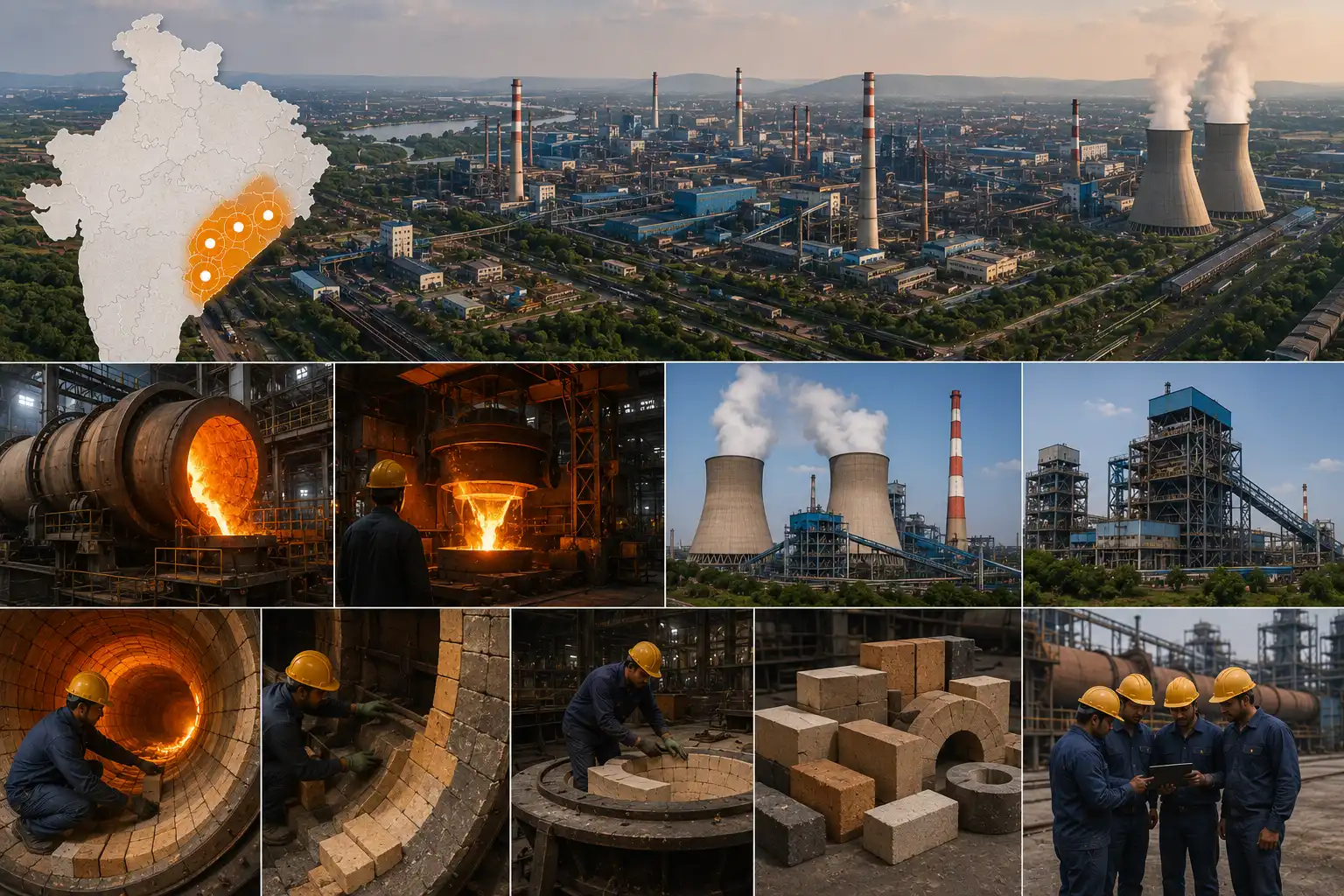
Chhattisgarh has the highest concentration of sponge iron (DRI) capacity in India, and this belt — running from Raipur through Raigarh, Korba, Bilaspur, to Bhilai — is its industrial spine. Korba alone is one of the country's largest power generation hubs. The combination of dense sponge iron rotary kiln capacity plus heavy thermal and captive power generation makes this the single largest cluster by number of distinct refractory-lined units needing shutdown attention.
What plant engineers in this cluster are typically planning for
- DRI rotary kiln brick relining — discharge end, reduction zone, and pre-heating zone
- Induction furnace lining replacement — feeding the region's dense induction-based steel capacity
- Thermal power plant boiler refractory — Korba's generation capacity drives heavy CFBC/AFBC demand
- Waste heat recovery boiler (WHRB) refractory — common across DRI-linked CPPs in this belt
- Kiln shell hot-spot inspection and emergency patch repair before relining
- Ladle and tundish refractory for the Bhilai integrated steel segment
Ballari – Hospet – Belgaon
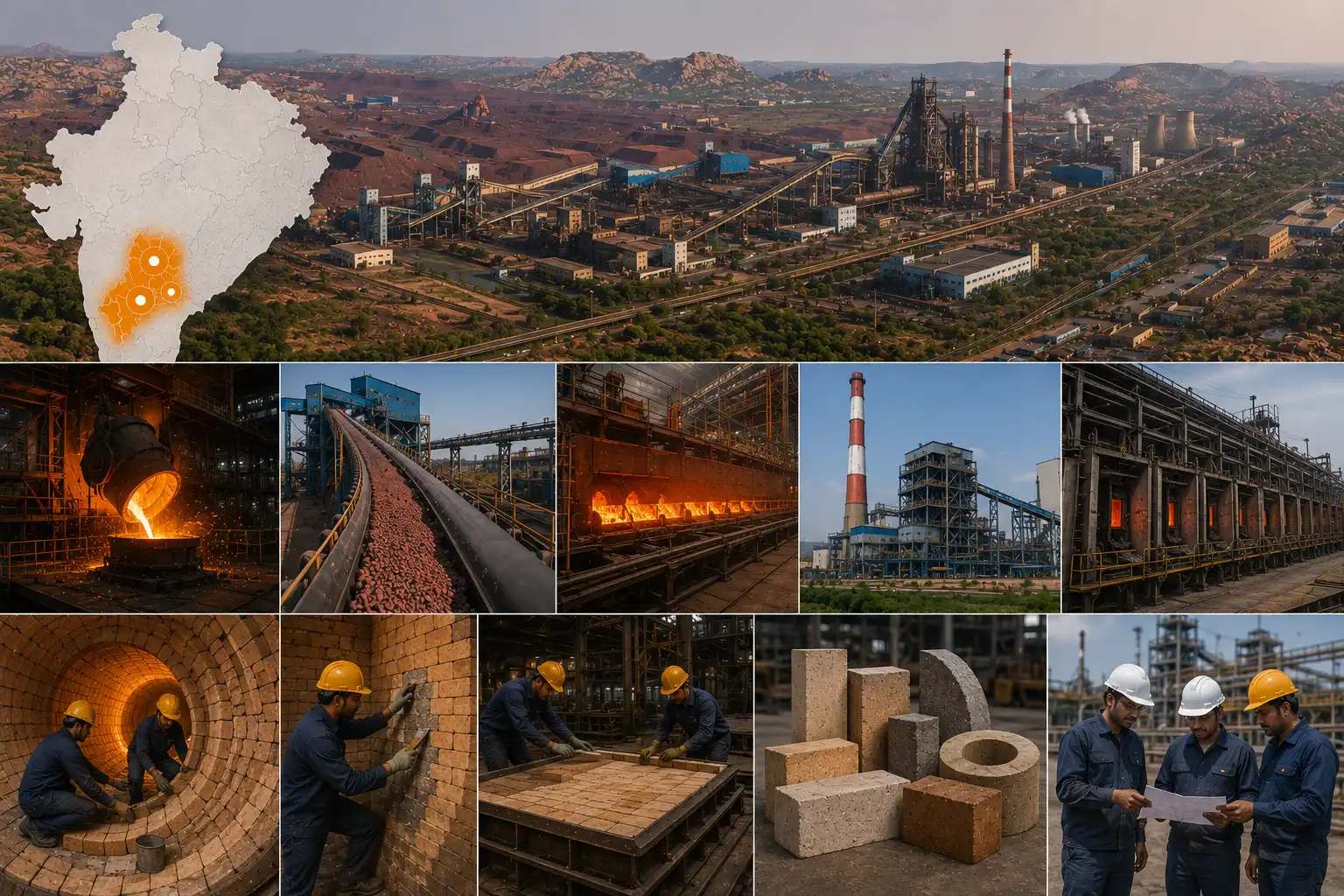
Ballari-Hospet sits on one of India's richest iron ore belts, and the steel and pelletisation capacity built around it makes this corridor a major refractory consumer — particularly for blast furnace and pellet induration furnace linings. Belgaon adds further engineering and foundry-linked capacity to the southern edge of this cluster.
What plant engineers in this cluster are typically planning for
- Blast furnace hearth and bosh refractory inspection — critical wear zone monitoring
- Pellet induration furnace refractory — travelling grate hood and windbox lining
- Sinter plant refractory repair — high-abrasion zones
- CPP boiler refractory tied to steel plant production cycles
- Coke oven and by-product plant refractory inspection
Hazira – Dahej – Bharuch – Mundra
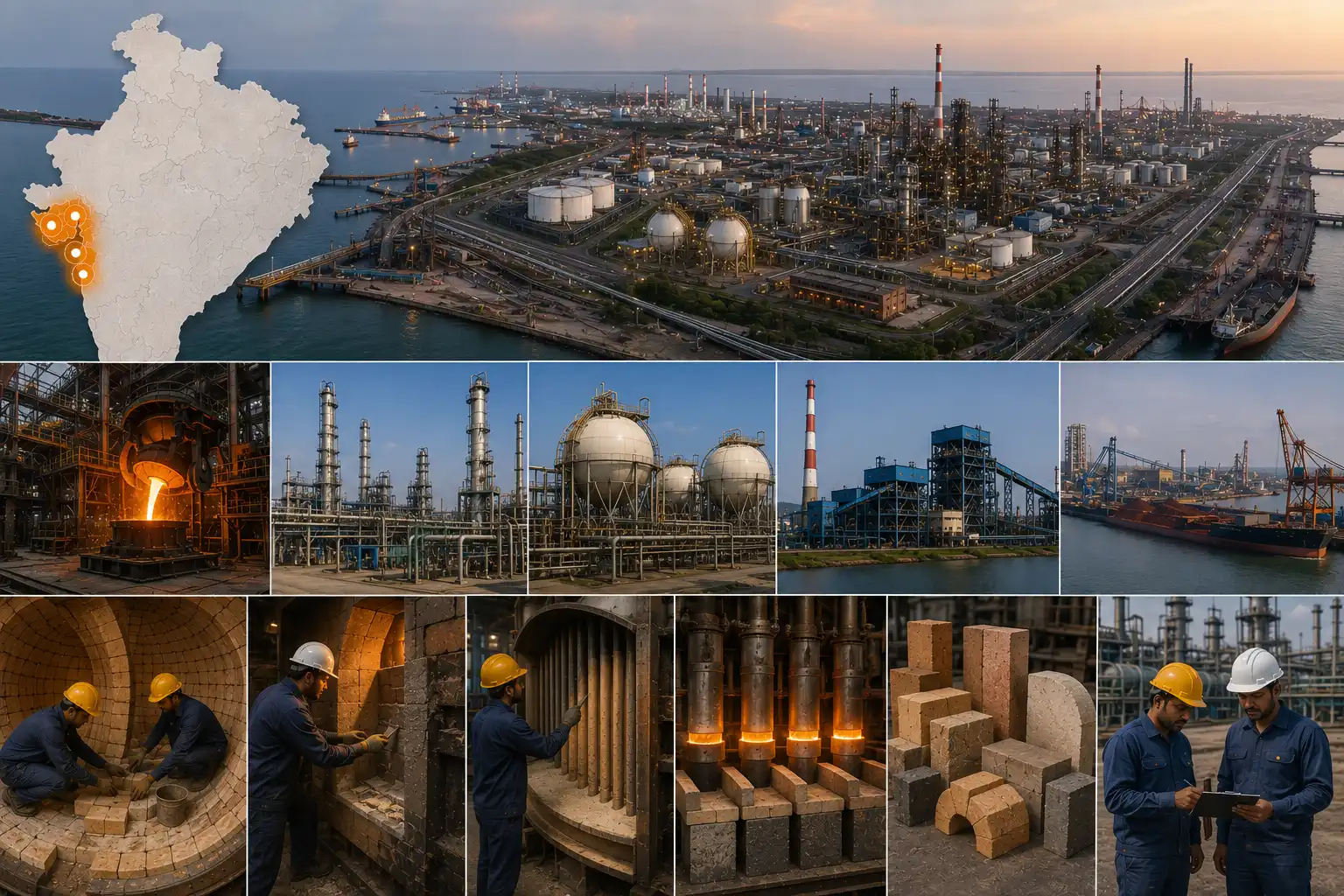
Gujarat's coastal industrial belt is unique among these six clusters — it combines major integrated steel capacity at Hazira with one of India's densest chemical and petrochemical manufacturing zones at Dahej and Bharuch, plus port-linked power at Mundra. This mix means refractory demand here spans both metallurgical and process-industry linings — a different skill set than the pure steel/sponge iron clusters.
What plant engineers in this cluster are typically planning for
- Steel plant refractory — blast furnace, BOF, ladle, and reheating furnace work at Hazira
- Ammonia and urea reformer furnace refractory — fertilizer plant turnarounds at Dahej/Bharuch
- Ethylene cracker furnace refractory — petrochemical heater linings
- Sulphuric acid plant converter refractory — acid-resistant castable and brick
- Process heater firebox ceramic fibre replacement across chemical units
- Port-linked CPP boiler refractory at Mundra
Jamshedpur – Dhanbad – Bokaro
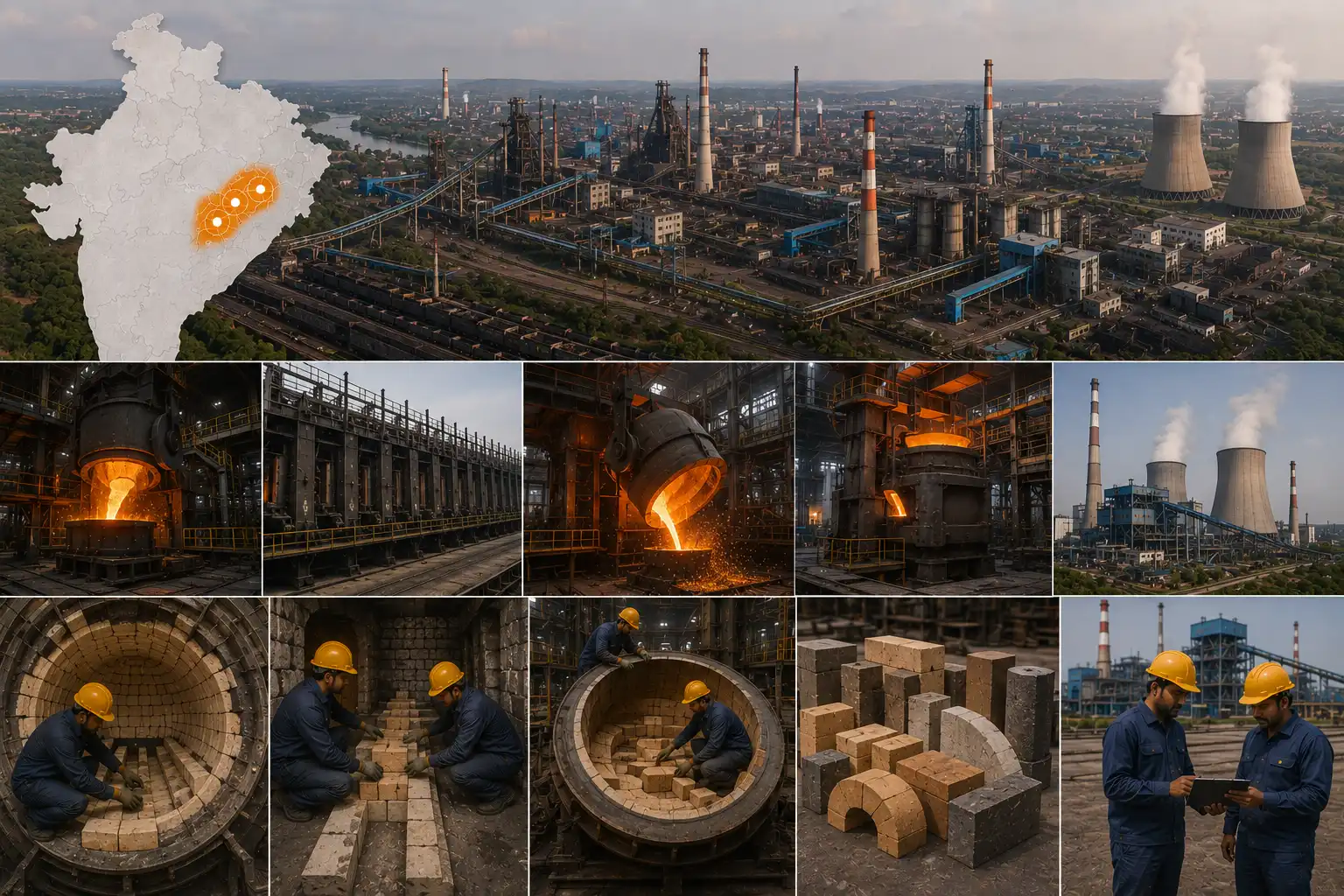
India's oldest and most established steel corridor. Jamshedpur's integrated steel capacity, Bokaro's steel plant, and Dhanbad's coking coal supply chain together form a mature industrial belt with decades of accumulated refractory infrastructure — much of it on long-established shutdown cycles that plant engineers here know intimately.
What plant engineers in this cluster are typically planning for
- Blast furnace stove (hot blast stove) refractory — checker brick and dome refractory inspection
- Coke oven battery refractory repair — silica brick replacement in older batteries
- BOF and EAF vessel lining relining
- Continuous casting tundish and ladle refractory turnaround
- Thermal power plant boiler refractory tied to steel plant captive generation
Chandrapur – Nagpur – Jalna – Kolhapur – Shambhajinagar
This is MMP Refratech's home cluster, and one of the most diverse on this list. Chandrapur and Nagpur carry heavy thermal power and sponge iron capacity. Kolhapur and Shambhajinagar (Aurangabad) bring dense foundry and engineering-casting demand. Jalna adds further steel re-rolling and induction furnace capacity. The result is a cluster that spans nearly every refractory application type in a single state — power boiler, DRI kiln, induction furnace, and cupola, all within reasonable trucking distance of each other.
What plant engineers in this cluster are typically planning for
- Thermal power plant boiler combustion chamber refractory — Chandrapur's generation capacity
- Sponge iron rotary kiln relining — Nagpur-Chandrapur DRI belt
- Induction furnace and cupola relining — Kolhapur and Shambhajinagar foundry clusters
- CPP refractory tied to sponge iron and steel re-rolling units in Chandrapur and Jalna
- Heat treatment furnace ceramic fibre replacement — engineering and auto component units
Section 08Cluster Priority Matrix — Where to Book First
If you're managing refractory budgets or contractor relationships across multiple sites, here's a relative comparison of the six clusters by refractory demand intensity, contractor competition, and how early you should be locking in your shutdown slot.

| Cluster | Dominant Industry Mix | Demand Intensity | Booking Lead Time |
|---|---|---|---|
| Raipur–Raigarh–Korba–Bilaspur–Bhilai | Sponge Iron + Steel + CPP + Power | 8+ weeks | |
| Kalinganagar–Angul–Jharsuguda–Paradip | Integrated Steel + CPP + Power | 8+ weeks | |
| Chandrapur–Nagpur–Jalna–Kolhapur–Shambhajinagar | Power + Sponge Iron + CPP + Foundry | 6 weeks | |
| Hazira–Dahej–Bharuch–Mundra | Steel + Chemical + Fertilizer + CPP | 6–8 weeks | |
| Ballari–Hospet–Belgaon | Steel + Pellet Plant + CPP | 6 weeks | |
| Jamshedpur–Dhanbad–Bokaro | Integrated Steel + Power | 6 weeks |
Section 09Decision Framework for Plant Engineers — What to Do This Week
Whichever cluster your plant sits in, the sequence of decisions is the same. Here's the framework MMP Refratech recommends to maintenance heads planning shutdown refractory work this season.

Confirm your shutdown date against the cluster calendar
If your CPP shares a grid or steam connection with a parent plant, confirm both shutdown dates are aligned. Misaligned dates inside the same cluster are the most common cause of mid-shutdown contractor reallocation delays.
Run a pre-shutdown thermal audit now
Don't wait for the furnace to go cold to find out the scope. Infrared thermography 4–6 weeks before shutdown defines exactly which zones need full relining versus patching — and locks in an accurate material order.
Lock contractor capacity for your cluster, not just your plant
Ask any contractor you're evaluating how many other shutdowns they're committed to in your cluster during the same window. A contractor stretched across five plants in the same 50 km radius cannot guarantee your timeline.
Pre-position critical material at site
High-alumina brick, basic brick, and specialty castables can have 4–8 week lead times during peak season. Order and stage material well ahead — don't let material delivery become the critical path item during your shutdown window.
Build the heat-up schedule into your shutdown timeline from day one
Controlled heat-up and dry-out after relining is non-negotiable time — it cannot be compressed without risking the new lining. Build this into the published shutdown schedule, not as an informal buffer at the end.
Section 10Frequently Asked Questions — Cluster-Wise Shutdown Planning
Planning a Shutdown in One of These Clusters?
MMP Refratech provides cluster-coordinated refractory shutdown services — thermal audit, material pre-positioning, relining, and heat-up supervision — across all six corridors. Book your slot before the window fills.