

When a furnace, kiln, ladle, or boiler needs relining and the shutdown clock is ticking, plant engineers don't have time to lay brick joint by joint. That's why refractory castables and monolithics have become the default choice for India's steel, cement, power, and foundry industries — and why searches like "refractory castable manufacturer Karnataka," "monolithic refractory supplier India," and "refractory castable exporter" are rising steadily among industrial buyers.
MMP Refratech Pvt. Ltd. manufactures and exports a complete range of refractory castables and monolithics, supplying industrial clients across Karnataka and pan-India, as well as international buyers. This guide breaks down exactly what castables are, which grade fits which application, and how to choose the right manufacturer.
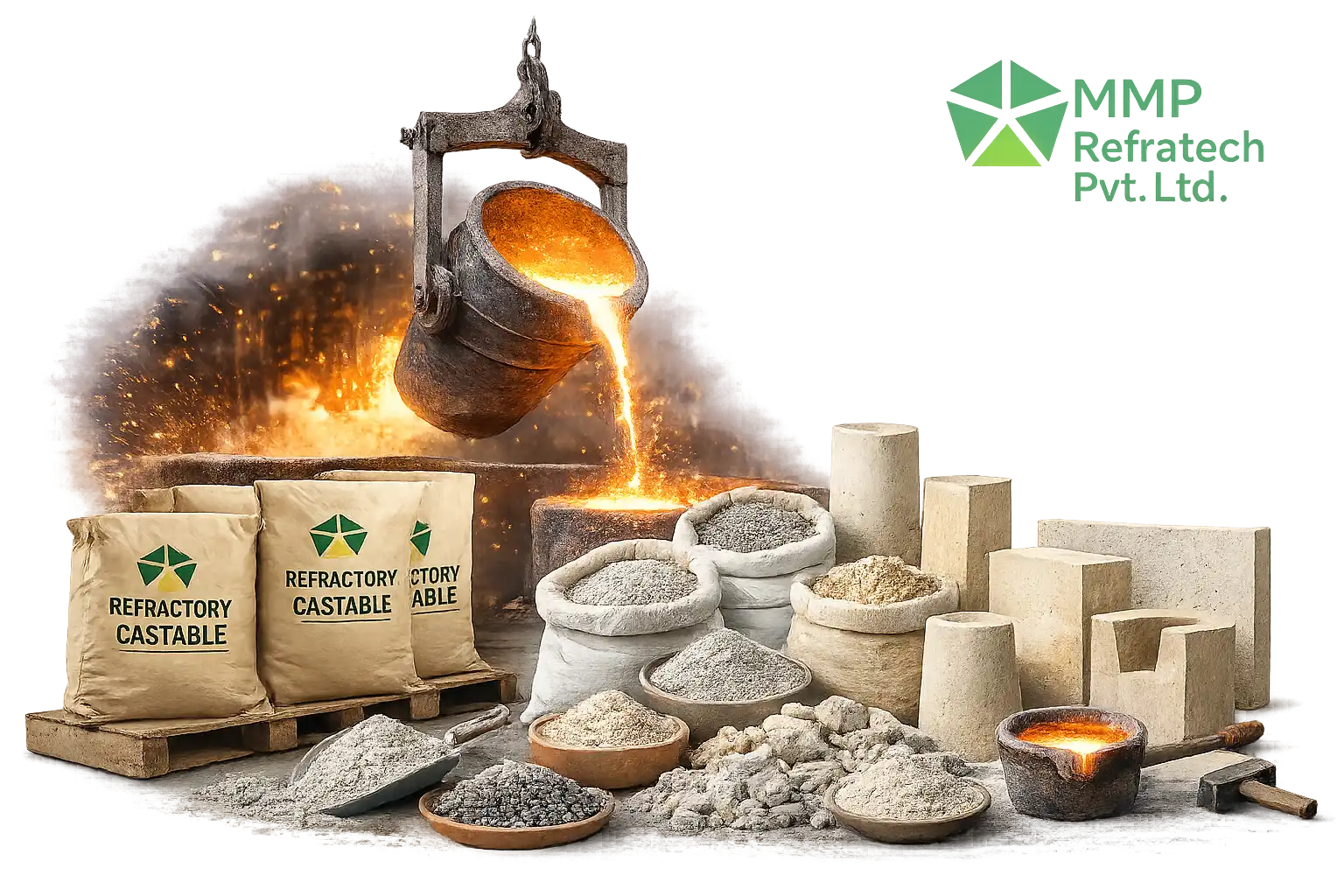
What Are Refractory Castables & Monolithics?
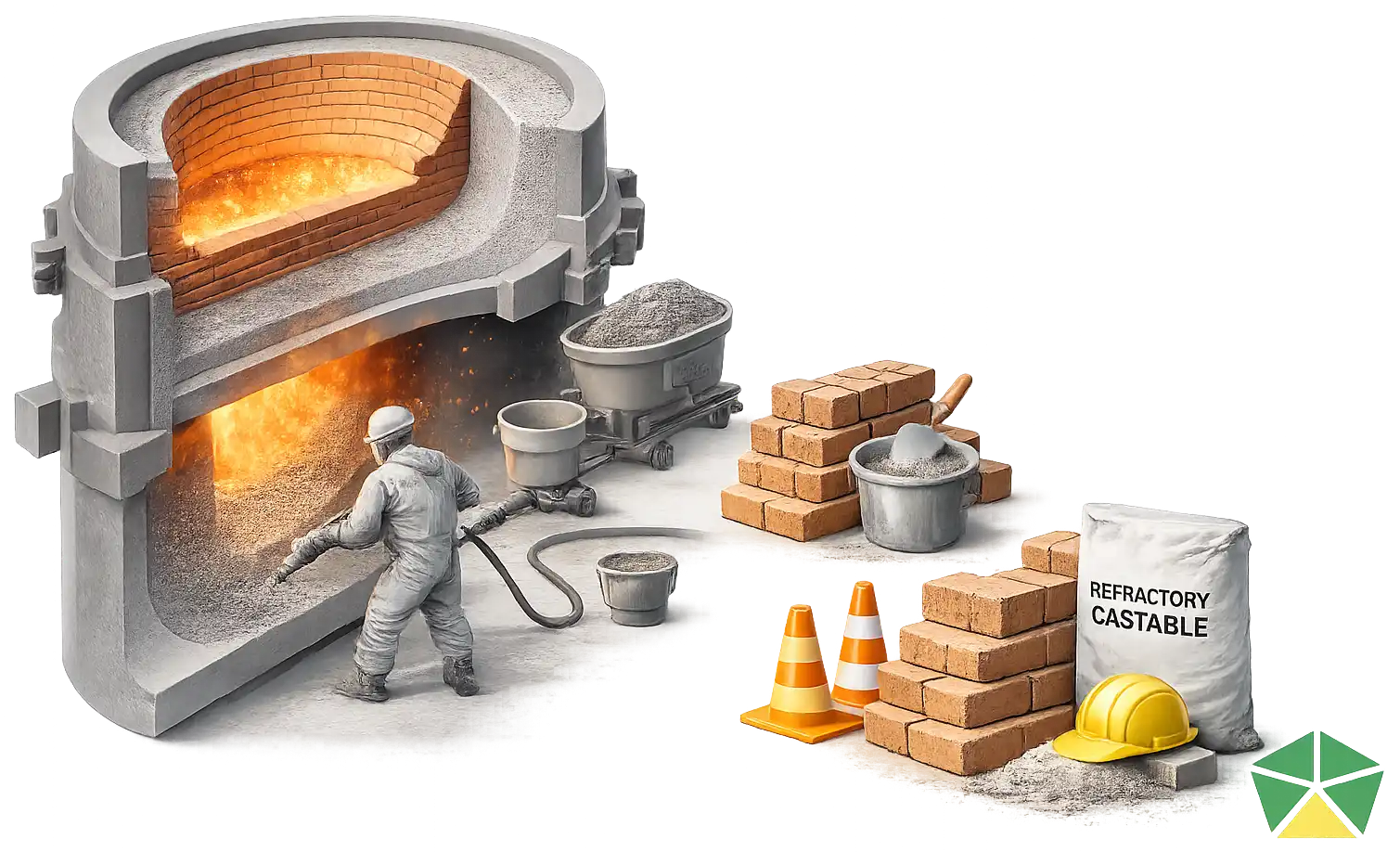
Refractory castables are unshaped, monolithic refractory materials supplied as a dry powder — a formulated mix of refractory aggregates, high-alumina cement or low-cement binders, and additives. On site, the powder is mixed with water and then cast, vibrated, pumped, gunned, or rammed into place, curing into a seamless, jointless lining.
Why plants are shifting from bricks to castables:
- No mortar joints — joints are typically the first point of failure in brick linings; monolithic linings eliminate them entirely
- Faster installation — critical when a shutdown window is measured in hours, not days
- Adapts to any geometry — ideal for curved kiln sections, ladle bottoms, irregular furnace roofs, and tundish linings that bricks can't easily shape to
- Higher campaign life when the correct grade is engineered for the application, reducing relining frequency and total cost per heat/cycle
MMP Refratech's Castable & Monolithic Product Range
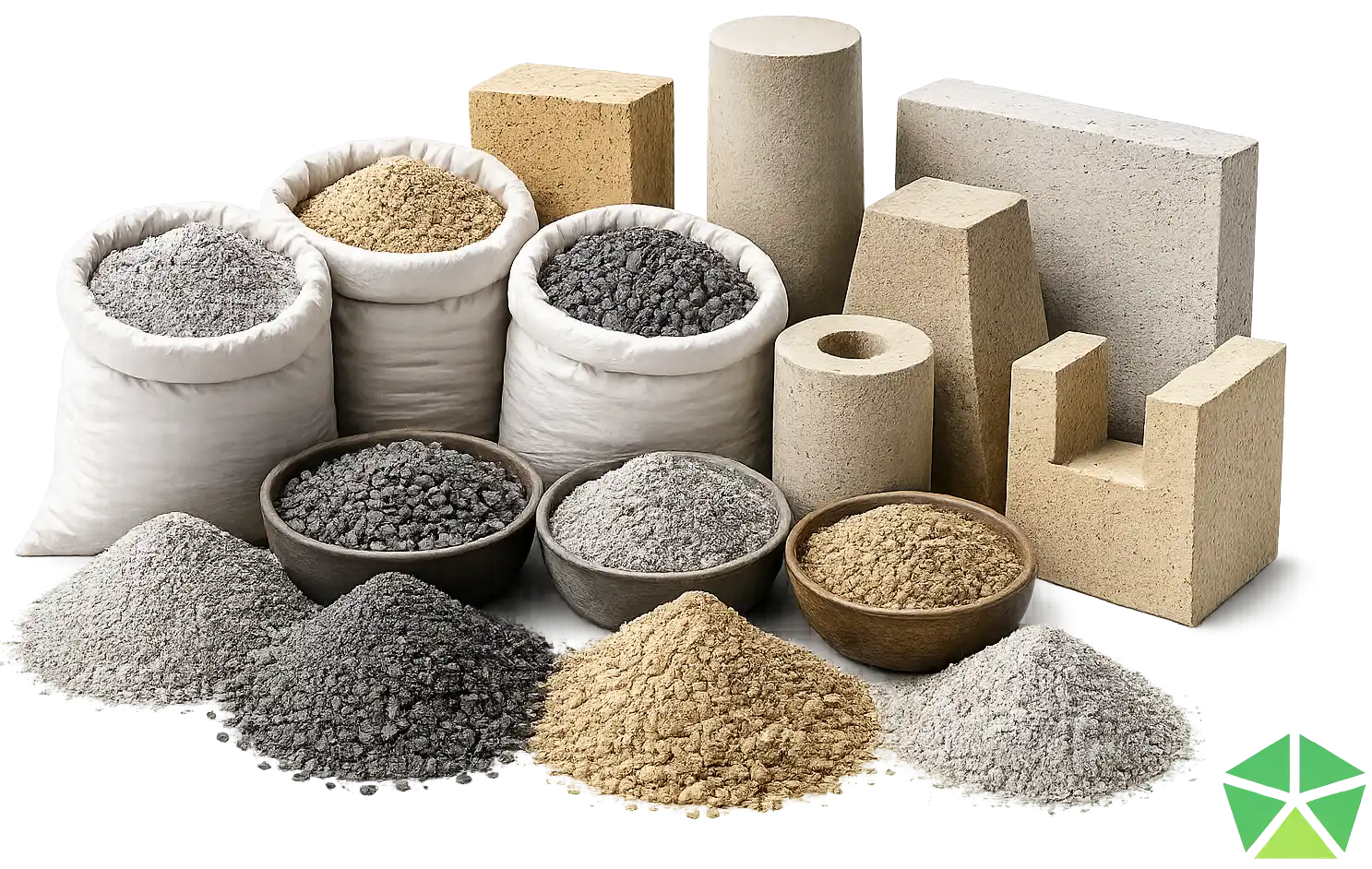
MMP Refratech supplies a full grade range engineered for different temperature zones, abrasion levels, and chemical exposure conditions:
| Castable Grade | Key Property | Typical Application |
|---|---|---|
| Medium Purity Dense Castables | Good strength at moderate cost | General furnace and kiln linings, boiler settings |
| High Purity Dense Castables | High alumina content, superior thermal stability | Rotary kilns, incinerators, heavy-duty furnace zones |
| Low Cement Castables (LCC) | Reduced cement content, improved density & strength, better resistance to slag and chemical attack | Rotary kilns, boiler linings, reheating furnaces — widely used in steel, cement, and power industries |
| Ultra-Low Cement Castables (ULCC) | Minimal cement content, very low porosity, exceptional durability | High-abrasion zones, ladles, and critical applications in steel, cement, and chemical plants operating above 1500°C |
| Insulating & Lightweight Castables | Low thermal conductivity, low thermal mass | Furnace roofs, back-up insulation layers, foundry reverberatory furnace roofs |
For ladle applications specifically, high-alumina low-cement castables with strong slag and thermal-shock resistance are the preferred choice — a formulation MMP engineers for the demanding tap-to-tap cycles seen in steel and foundry operations.
Explore the complete range on the Castables & Monolithics product page.
Karnataka's Industrial Clusters and Where Castables Are Used
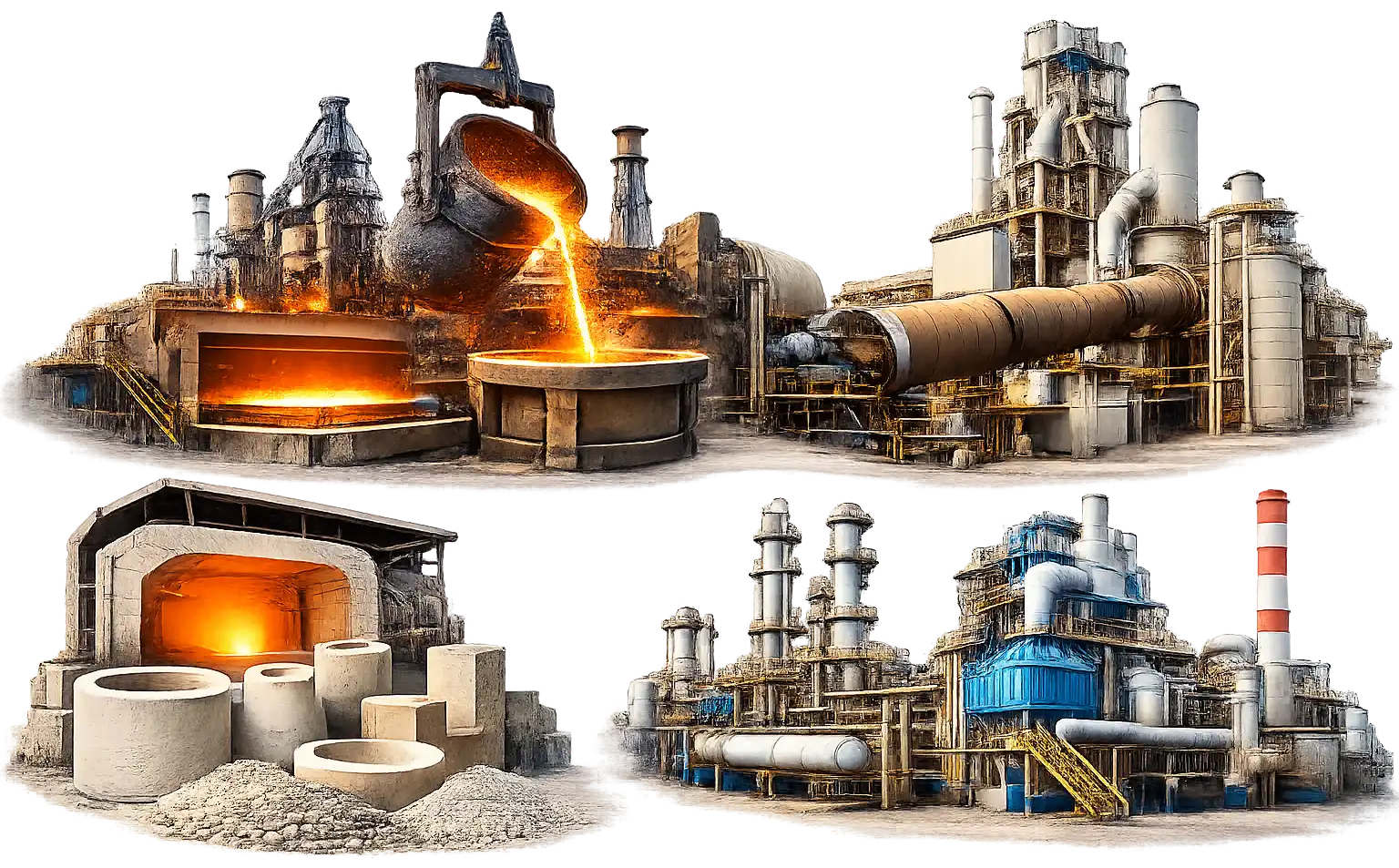
Karnataka's industrial demand for refractory castables is concentrated in a few key clusters — each with a different application profile:
Ballari–Hospet (Steel & Sponge Iron Belt)
Karnataka's steel clusters rely on castables for induction furnace linings, ladle repairs, EAF/IF delta and lip areas, and tundish linings — all zones where fast turnaround between heats is essential. Ultra-low cement and high-alumina castables are the standard here for their slag resistance and thermal shock tolerance.
Kalaburagi (Cement Corridor)
Cement kilns need castables engineered for continuous high-temperature exposure and mechanical abrasion from raw meal. Kiln inlet/outlet zones, cooler linings, and preheater cyclones commonly use dense and low-cement castable formulations.
Belagavi & Hubballi-Dharwad (Foundries & Forging)
Aluminium, copper, brass, and steel foundries in this belt use insulating castables and ceramic-fiber-backed monolithics for reverberatory furnace roofs, and magnesia-based or alumina-spinel castables for ladle linings — matched to whether the slag chemistry is acidic or basic.
Mangaluru (Refineries, Fertilizer & Petrochemicals)
Process heaters, reactors, and flue systems in this cluster require castables with strong resistance to chemical attack and corrosion, particularly in coastal, humid conditions.
Bengaluru, Peenya & Dobaspet (Boilers, Pharma, Process Industries)
Boiler refractory linings — for AFBC, CFBC, WHRB, and fired boilers — use a mix of dense and insulating castables depending on the zone (burner area vs. superheater vs. flue path).
MMP Refratech: Manufacturer and Exporter, Not Just a Trader
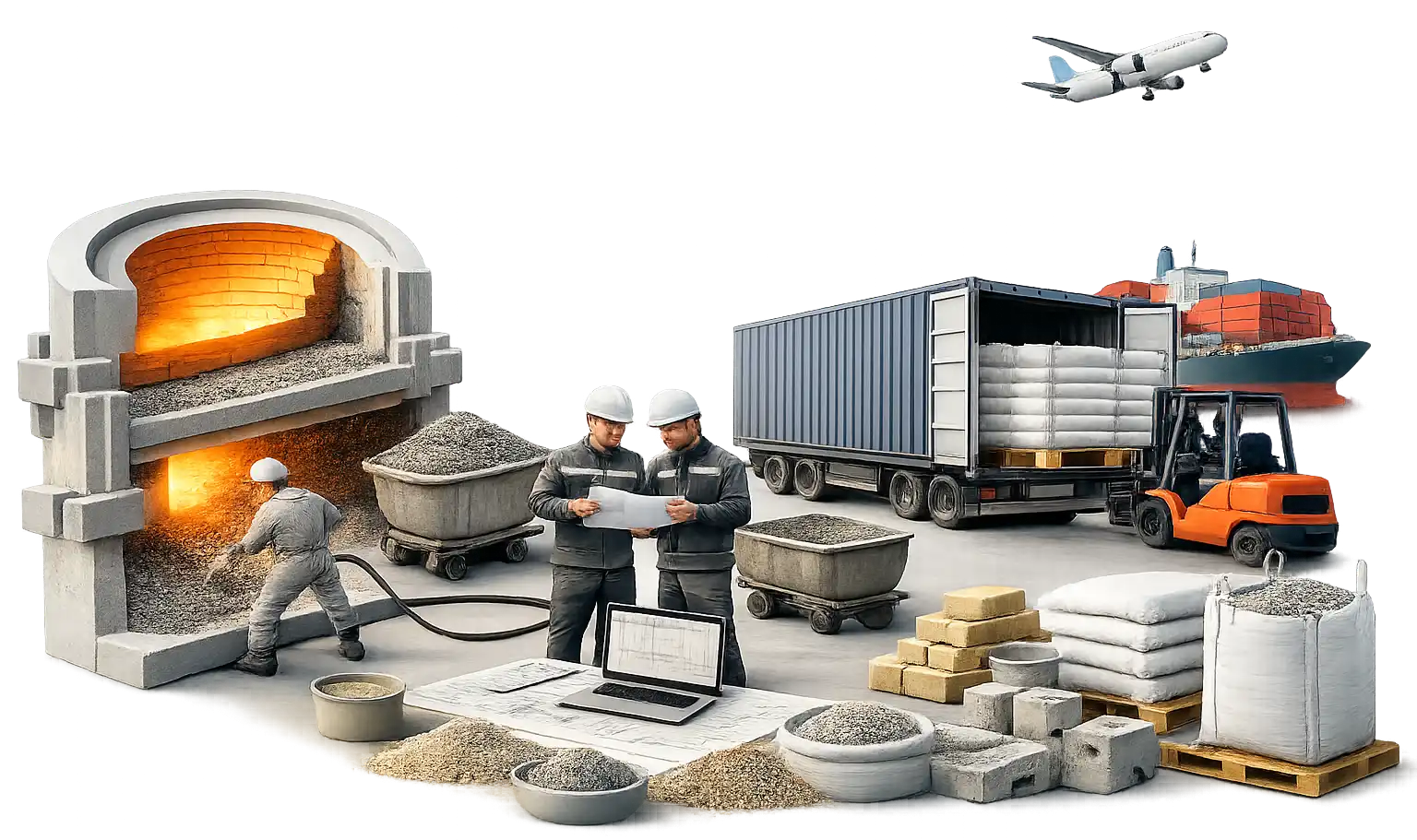
A recurring problem Karnataka buyers report is working with resellers who don't understand the application — they simply supply whatever grade is in stock. MMP Refratech positions itself differently:
- 01. Manufacturer, not a trading intermediary — formulations are engineered and quality-controlled at source
- 02. Exporter — MMP supplies refractory castables and monolithics to international buyers in addition to serving Indian industrial clusters, meeting the consistency and documentation standards export orders demand
- 03. Application-led selection — grade recommendations are based on furnace type, temperature zone, slag chemistry, and abrasion level, not just catalog browsing
- 04. End-to-end service — supply is backed by refractory engineering & design, on-site application services, patching & maintenance, and heat-up & dry-out services after installation — so a new castable lining isn't damaged by incorrect curing
How to Choose the Right Castable Grade: Key Selection Parameters
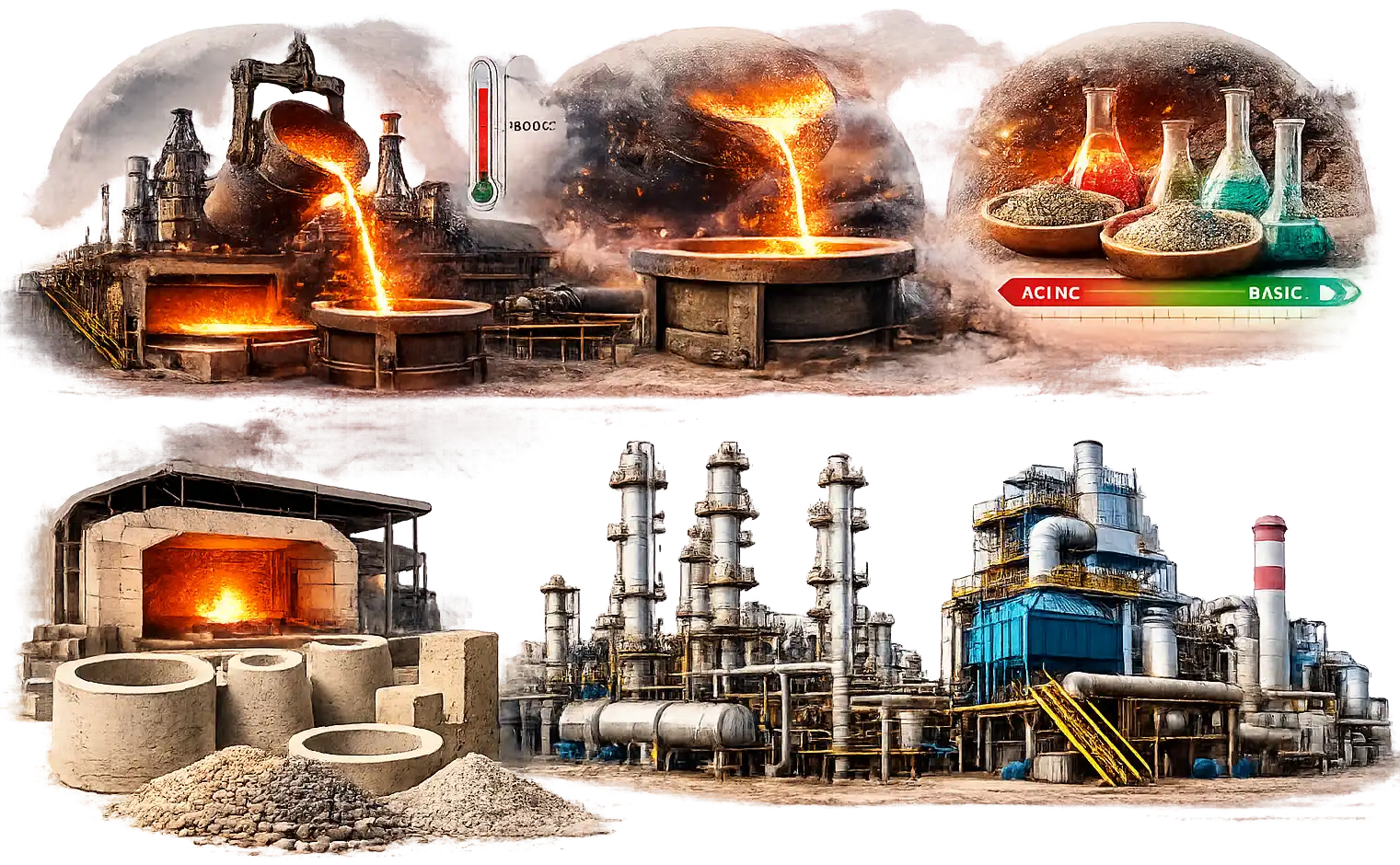
Procurement teams often default to price comparison alone, which is a costly mistake. Before ordering, evaluate:
- 01. Operating temperature — Does the zone run above or below 1500°C?
- 02. Slag chemistry — Acidic slags need acid/neutral refractories; basic slags need magnesia/dolomite-based linings
- 03. Abrasion exposure — High-wear zones (charging areas, flow channels) need higher-density, higher-strength grades
- 04. Thermal cycling pattern — Continuous operation (e.g., a cement kiln) favors dense castables; batch operations with rapid heat-up/cool-down (e.g., induction furnaces) benefit from castables with strong thermal shock resistance
- 05. Cost per heat/cycle, not cost per bag — A higher-grade castable lasting 800 heats is cheaper over its service life than a budget grade lasting 300 heats, even at double the unit price
- 06. Installation method available — casting, vibration casting, ramming, or gunning — furnace geometry and shutdown duration determine the practical choice
Get a Castable Quote for Your Plant in Karnataka or Anywhere in India
Whether you're relining a rotary kiln in Kalaburagi, an induction furnace in Ballari-Hospet, a ladle in Belagavi, or a process heater in Mangaluru — or sourcing for export — MMP Refratech can recommend and supply the right castable grade for your exact operating conditions.