

Section 01Why Contractor Selection Is the Highest-Leverage Decision You'll Make

Most shutdown planning effort goes into scope definition, scheduling, and budget — and rightly so. But once the scope is frozen and the budget approved, the single decision that determines whether your refractory work actually finishes on time is which contractor executes it.
This isn't a minor procurement choice. External contractors typically carry 40–70% of total execution labor on an industrial shutdown. For refractory work specifically — where quality depends on crew skill, correct material handling, and disciplined heat-up procedure — a contractor who is overcommitted, under-skilled, or working without proper supervision doesn't just risk a late finish. They risk a lining that fails in month three instead of lasting two years, turning a planned maintenance cost into an unplanned breakdown six months later.
The seven questions below are designed to surface that risk before you sign, not after the furnace is already cold and the crew hasn't shown up.
Question 01How many other shutdowns are you committed to in this window?

This is the single most important question on this list, and the one most plant managers never ask. A contractor doesn't need to lie to leave you under-resourced — they simply need to be honest about a commitment made to three other plants the same week, and quietly thin out your crew when theirs gets stretched. In dense industrial clusters during peak shutdown season, this happens routinely, not as an exception.
Question 02Can you source this exact grade within my lead time?
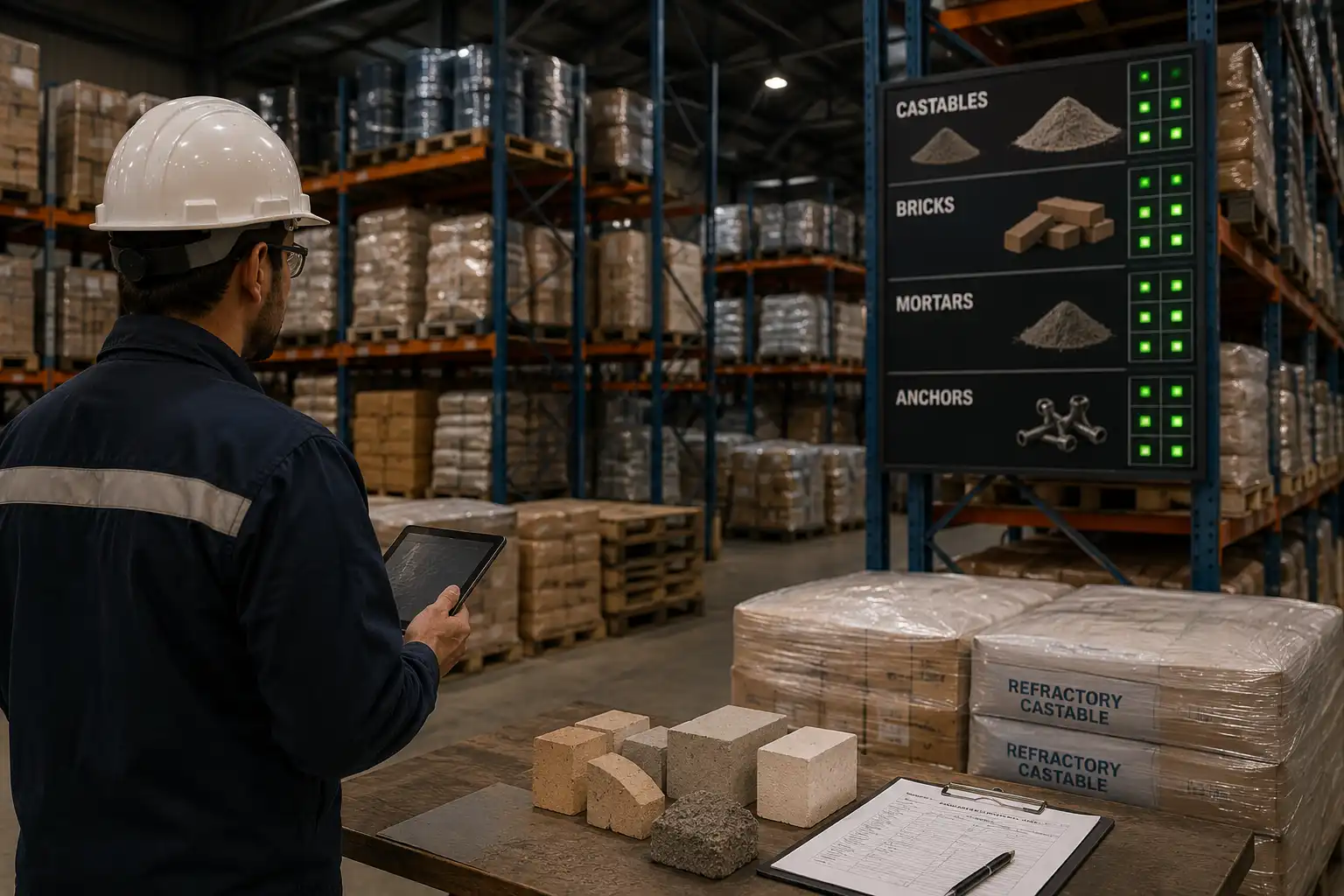
Specialty castables, basic bricks, and high-alumina grades can carry 4–8 week lead times during peak season — and material delay is one of the most common, least visible causes of shutdown slippage. A contractor who quotes you a price without confirming stock or lead time is quoting a number, not a commitment.
Question 03What is your crew-to-scope ratio for this job?
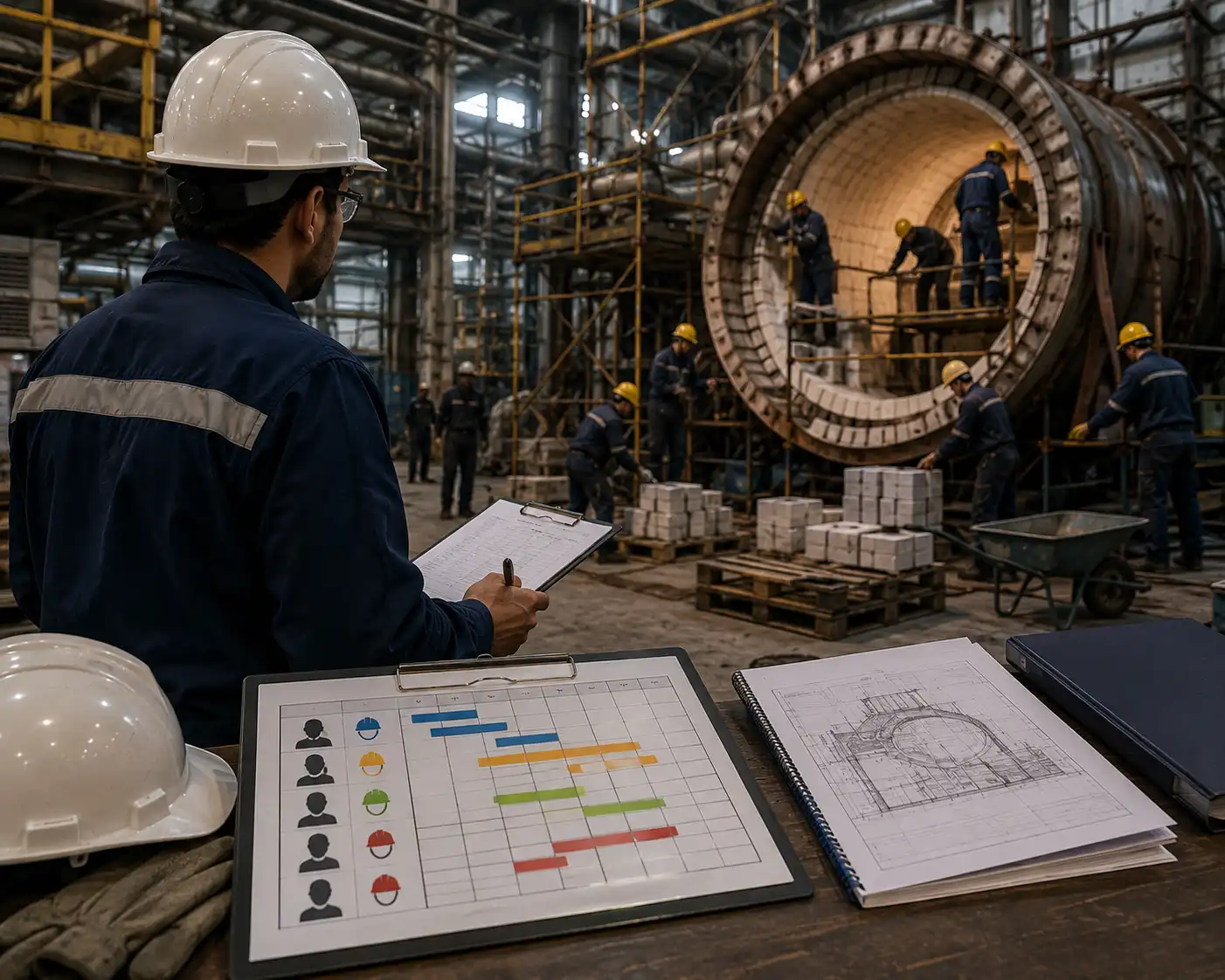
A vague headcount promise ("we'll send a team") is not a plan. Ask for the actual crew size and skill mix mapped against your specific tonnage and zones — a 40-tonne induction furnace reline needs a materially different crew than a 200-tonne cement kiln section. If the contractor can't break this down, they likely haven't sized the job properly yet.
Question 04Who supervises heat-up and dry-out, and how?

This is where most premature lining failures actually originate — not in the installation, but in a rushed heat-up that drives off moisture too fast and cracks the new lining before it ever sees a full production heat. A contractor who treats heat-up as "the plant's responsibility once we're done" is handing you the highest-risk part of the job with no expertise attached.
Question 05What safety certifications and permits does your crew hold?

Refractory work happens inside furnaces, kilns, and reactors — confined spaces, often at height, frequently adjacent to live hot work zones. A safety incident doesn't just halt your contractor's crew; it can shut down the entire site pending investigation, turning a planned 10-day shutdown into an open-ended one. This question also matters more in chemical and fertilizer plants, where permit and compliance overhead is typically stricter than in steel or power.
Question 06What does your contract say about schedule delay?
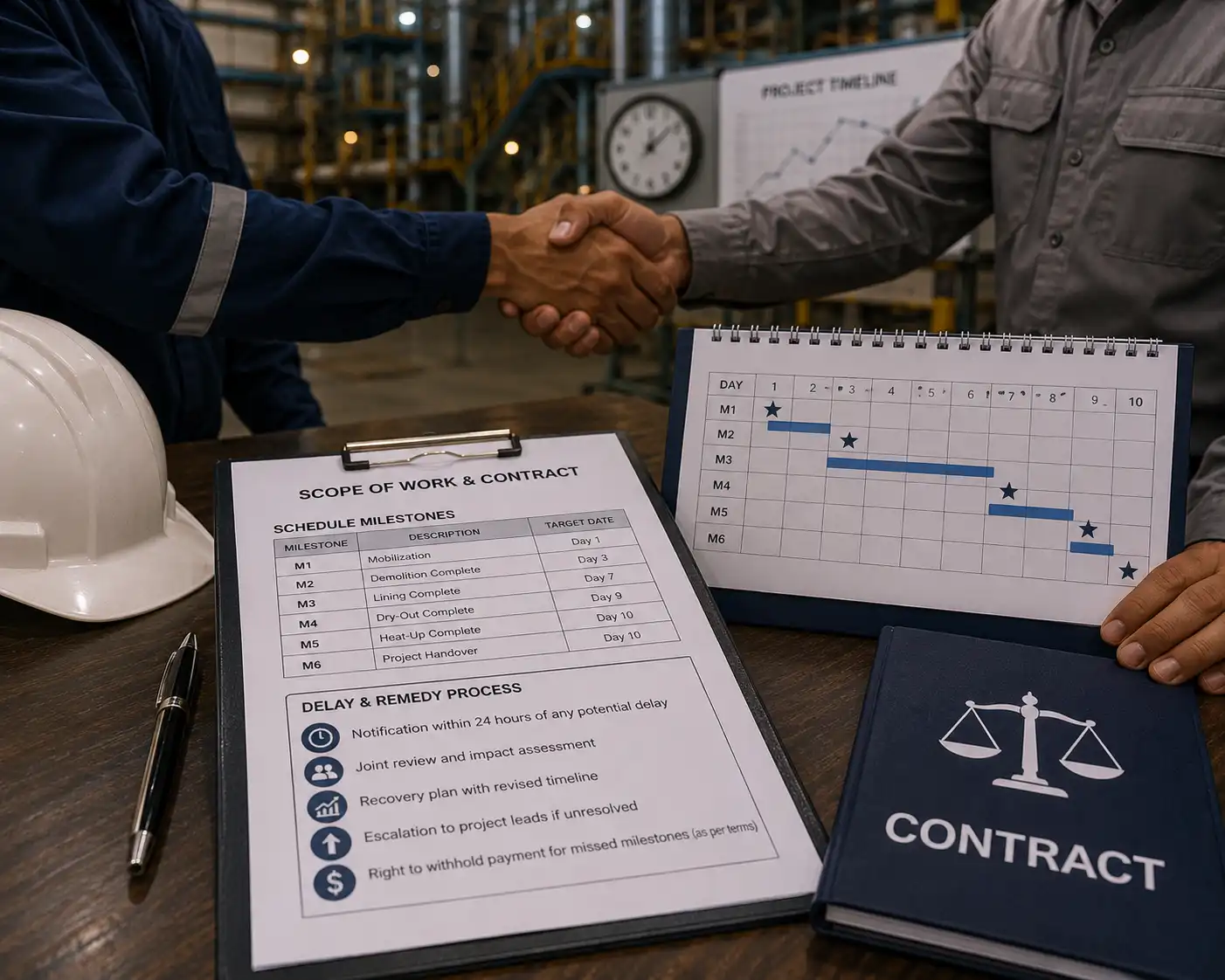
A verbal assurance of "we'll hit the date" is not a commercial term. The most expensive shutdown delays are the ones with no contractual consequence attached — the contractor has no financial incentive to prioritise your job over a competing commitment. This doesn't mean every contract needs punitive penalty clauses, but it should clearly define what "on schedule" means and what recourse exists if it isn't met.
Question 07Can I see a reference from a similar plant and scope?

A contractor's general experience list doesn't tell you whether they've actually executed work comparable to yours. A foundry-focused contractor relining their first cement kiln section is a different risk profile than one who relines cement kilns every season. Ask specifically for a reference matched to your furnace type, tonnage, and ideally your region — a reference 1,500 km away in a different industry tells you little about how they'll perform on your site.
Section 09Contractor Comparison Scorecard

Use this scorecard side-by-side when comparing more than one contractor quote. A contractor who scores "No" on three or more rows is a meaningfully higher schedule and quality risk, regardless of how competitive their price looks.
| Evaluation Criteria | Contractor A | Contractor B |
|---|---|---|
| Named, dedicated site supervisor (not shared across sites) | ☐ Yes / ☐ No | ☐ Yes / ☐ No |
| Confirmed material stock or locked delivery date | ☐ Yes / ☐ No | ☐ Yes / ☐ No |
| Day-by-day crew plan with skill breakdown | ☐ Yes / ☐ No | ☐ Yes / ☐ No |
| Written, engineered heat-up schedule with on-site supervision | ☐ Yes / ☐ No | ☐ Yes / ☐ No |
| Documented safety certifications for confined space / hot work | ☐ Yes / ☐ No | ☐ Yes / ☐ No |
| Contract includes defined milestone dates | ☐ Yes / ☐ No | ☐ Yes / ☐ No |
| Verifiable reference — similar furnace type and scope | ☐ Yes / ☐ No | ☐ Yes / ☐ No |
Want this as a printable PDF checklist?
Take it into your next contractor meeting or send it to your procurement team.
Section 10Why the Lowest Quote Is Usually the Most Expensive One
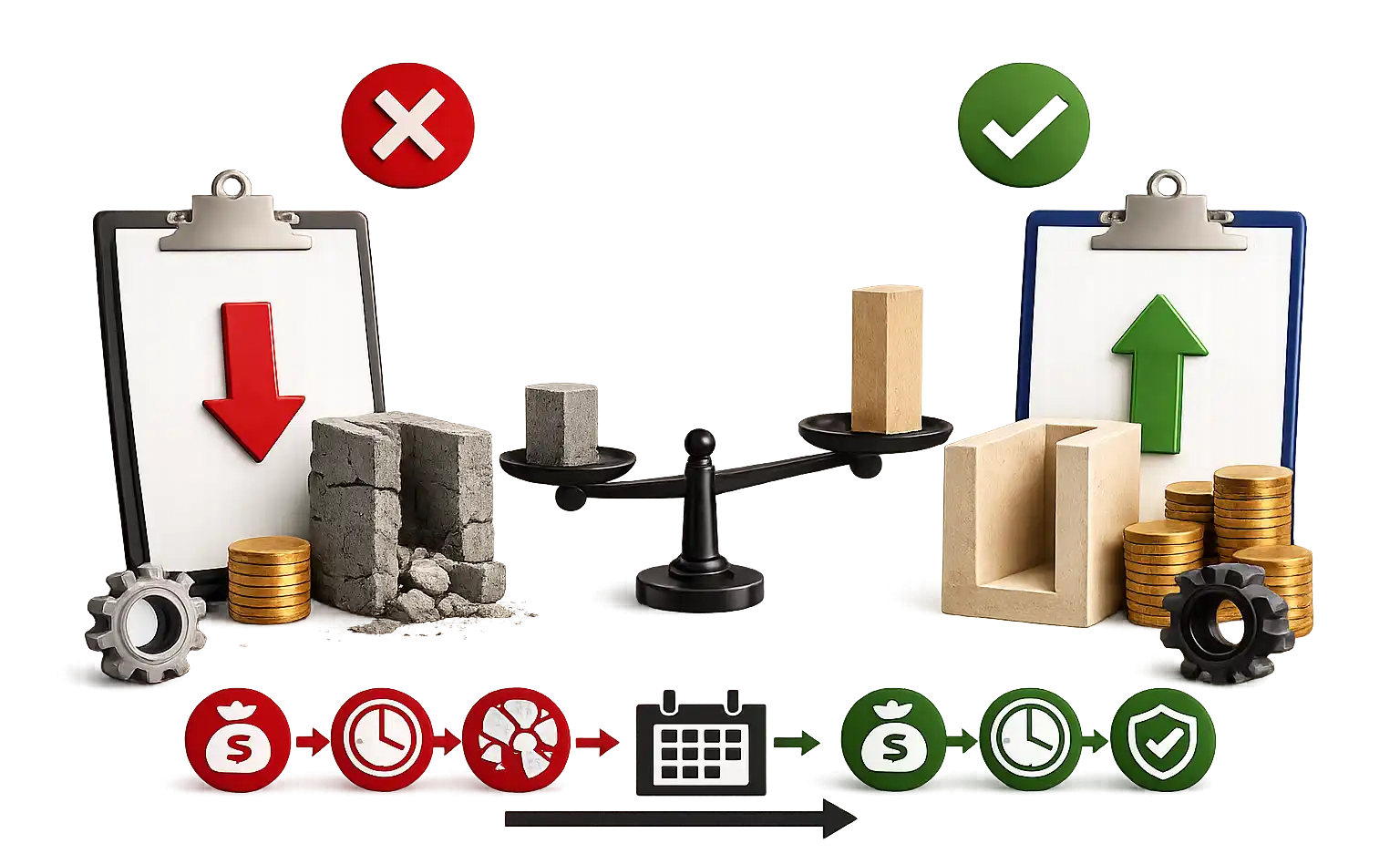
It's tempting to make the final call on price alone, especially when budgets are under scrutiny. But refractory is one of the clearest examples in industrial maintenance of where unit price and total cost diverge sharply.
A contractor's quote can be lower for several reasons — a thinner-margin business, a more efficient operation, or genuinely better pricing on materials. It can also be lower because they're specifying a cheaper, lower-grade castable than your application needs, planning a smaller crew than the scope requires, or omitting heat-up supervision entirely and leaving it to your operations team.
If two quotes differ significantly and you can't see why from the line items alone, ask both contractors directly: what grade of material are you specifying, and what service life do you expect from it under my operating conditions? A contractor confident in their work will answer specifically. One who can't, or won't, is telling you something important about the quote.
Section 11Frequently Asked Questions
Want to See How MMP Refratech Scores?
Run us through this same checklist. We'll give you straight answers on crew allocation, material stock, heat-up supervision, and references — before you sign anything.